

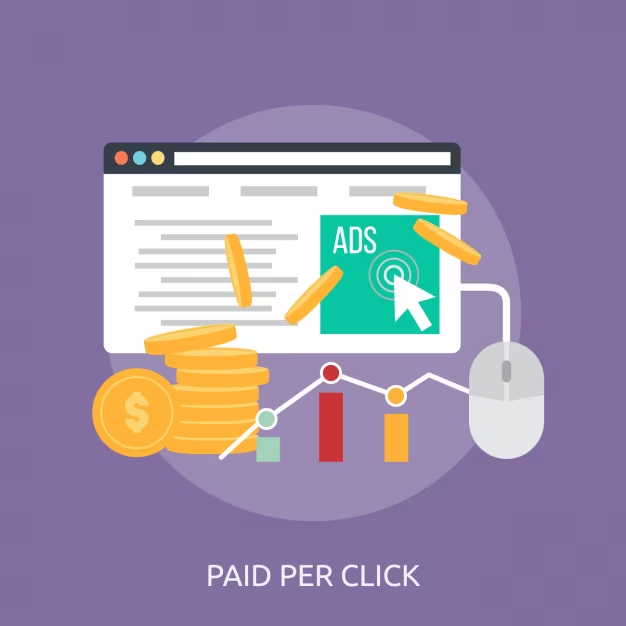
In the fast-paced world of digital marketing, Pay-Per-Click (PPC) advertising offers a powerful way to drive targeted traffic and generate leads. However, simply launching a PPC campaign isn’t enough. To achieve optimal results, continuous optimization is essential. PPC campaign optimization is the process of refining and improving various aspects of your campaigns to maximize return on investment (ROI) and achieve your business goals.
AceHighClub | CasinoCrazes | Playitbigs | CareToBeFit | healthnove
Understanding the Fundamentals: Key Metrics and Goals
Before diving into optimization strategies, it’s crucial to understand the key metrics that drive PPC performance. These include click-through rate (CTR), conversion rate, cost per click (CPC), and return on ad spend (ROAS). Defining clear campaign goals, such as increasing website traffic, generating leads, or driving sales, provides a framework for measuring success and guiding optimization efforts.
Tinywolfbrewing | realmadridweb | topdigitaltv | hkindogames | skysports4u
Keyword Optimization: Refining Targeting and Relevance
Keywords are the foundation of PPC campaigns. Optimizing keywords involves refining targeting and relevance to ensure that your ads reach the right audience. This includes:
- Refining Keyword Lists: Adding negative keywords to exclude irrelevant searches.
- Utilizing Match Types: Employing different match types (broad, phrase, exact) to control keyword targeting.
- Analyzing Search Terms: Regularly reviewing search term reports to identify new keywords and negative keywords.
- Keyword Grouping: Organizing keywords into relevant ad groups for better targeting.
Ad Copy Optimization: Crafting Compelling Messages
Ad copy plays a crucial role in attracting clicks and driving conversions. Optimizing ad copy involves crafting compelling messages that resonate with your target audience. This includes:
- Using Keyword Insertion: Dynamically inserting keywords into ad copy to improve relevance.
- Highlighting Unique Selling Propositions (USPs): Emphasizing the benefits of your products or services.
- Including Calls to Action (CTAs): Encouraging users to take specific actions, such as “Learn More” or “Shop Now.”
- A/B Testing Ad Copy: Experimenting with different ad copy variations to identify the most effective messages.
Landing Page Optimization: Enhancing User Experience and Conversions
Landing pages are the destination for users who click on your ads. Optimizing landing pages involves enhancing user experience and conversions. This includes:
- Ensuring Landing Page Relevance: Aligning landing page content with ad copy and keywords.
- Improving Page Load Speed: Optimizing images and code to reduce loading times.
- Creating a Clear and Concise Layout: Making it easy for users to find information and complete desired actions.
- Optimizing for Mobile Devices: Ensuring that landing pages are responsive and mobile-friendly.
Bid Management: Optimizing for Cost-Effectiveness
Bid management involves optimizing bids to achieve the desired balance between traffic and cost. This includes:
- Utilizing Automated Bidding Strategies: Employing automated bidding strategies, such as target CPA or target ROAS, to optimize bids based on campaign goals.
- Adjusting Bids Based on Performance: Regularly reviewing campaign performance and adjusting bids accordingly.
- Analyzing Competitor Bids: Monitoring competitor bids to identify opportunities and adjust your own bids.
- Using Ad Scheduling: Showing ads during the times that are most effective.
Location and Device Targeting: Reaching the Right Audience
Location and device targeting allow you to refine your audience and reach the most relevant users. This includes:
- Targeting Specific Geographic Locations: Showing ads to users in specific cities, regions, or countries.
- Adjusting Bids Based on Device Performance: Increasing or decreasing bids for specific devices, such as mobile or desktop.
- Using Demographic Targeting: Reaching users based on age, gender, or other demographic factors.
Utilizing Ad Extensions: Enhancing Ad Visibility and Information
Ad extensions provide additional information and enhance ad visibility. This includes:
- Sitelink Extensions: Adding links to specific pages on your website.
- Callout Extensions: Highlighting unique selling propositions or benefits.
- Call Extensions: Including your phone number in your ads.
- Structured Snippet Extensions: Providing structured information about your products or services.
Conversion Tracking and Analysis: Measuring Campaign Success
Conversion tracking and analysis are essential for measuring campaign success and identifying areas for improvement. This includes:
Aajkalkikhabar | realtechgadget | doodleartsltd | soundsupportva | starlovebuzz
- Setting Up Conversion Tracking: Implementing conversion tracking to track desired actions, such as form submissions or purchases.
- Analyzing Conversion Data: Regularly reviewing conversion data to identify trends and patterns.
- Using Attribution Modeling: Understanding how different touchpoints contribute to conversions.
A/B Testing: Experimenting and Refining
A/B testing involves experimenting with different campaign elements to identify the most effective variations. This includes:
- Testing Different Ad Copy Variations: Comparing the performance of different ad copy messages.
- Testing Different Landing Page Variations: Comparing the performance of different landing page layouts and content.
- Testing Different Bidding Strategies: Comparing the performance of different bidding strategies.
Continuous Monitoring and Optimization: Adapting to Change
PPC campaign optimization is an ongoing process that requires continuous monitoring and adaptation. The digital landscape is constantly evolving, so it’s essential to stay up-to-date with the latest trends and technologies. Regularly reviewing campaign performance and making adjustments as needed ensures that your campaigns remain effective and achieve your business goals.
Marketfocusnow | quickbizwave | thetradenetworks | upgradesnest | profixspace
In Conclusion:
PPC campaign optimization is a critical aspect of digital marketing success. By understanding key metrics, refining targeting, crafting compelling messages, and continuously monitoring performance, you can maximize ROI and achieve your business objectives. It is an ongoing process that requires dedication and attention to detail.

27 Comments
https://myteana.ru/forums/index.php?autocom=gallery&req=si&img=6617
Very good https://is.gd/N1ikS2
Very good https://is.gd/N1ikS2
Good https://is.gd/N1ikS2
Awesome https://is.gd/N1ikS2
https://shorturl.fm/FIJkD
https://shorturl.fm/oYjg5
https://shorturl.fm/FIJkD
https://shorturl.fm/N6nl1
https://shorturl.fm/YvSxU
https://shorturl.fm/6539m
https://shorturl.fm/9fnIC
https://shorturl.fm/j3kEj
https://shorturl.fm/N6nl1
https://shorturl.fm/68Y8V
https://shorturl.fm/68Y8V
https://shorturl.fm/TbTre
https://shorturl.fm/XIZGD
https://shorturl.fm/bODKa
https://shorturl.fm/N6nl1
https://shorturl.fm/68Y8V
https://shorturl.fm/hQjgP
https://shorturl.fm/VeYJe
https://shorturl.fm/JtG9d
https://shorturl.fm/0EtO1
https://shorturl.fm/47rLb
https://shorturl.fm/I3T8M